Lincoln and Kennedy: The Presidential Parallels
Elected exactly one hundred years apart, both presidents were tragically assassinated on a Friday, shot in the head, and succeeded by men named Johnson. We separate the verified historical facts from the enduring urban legends.
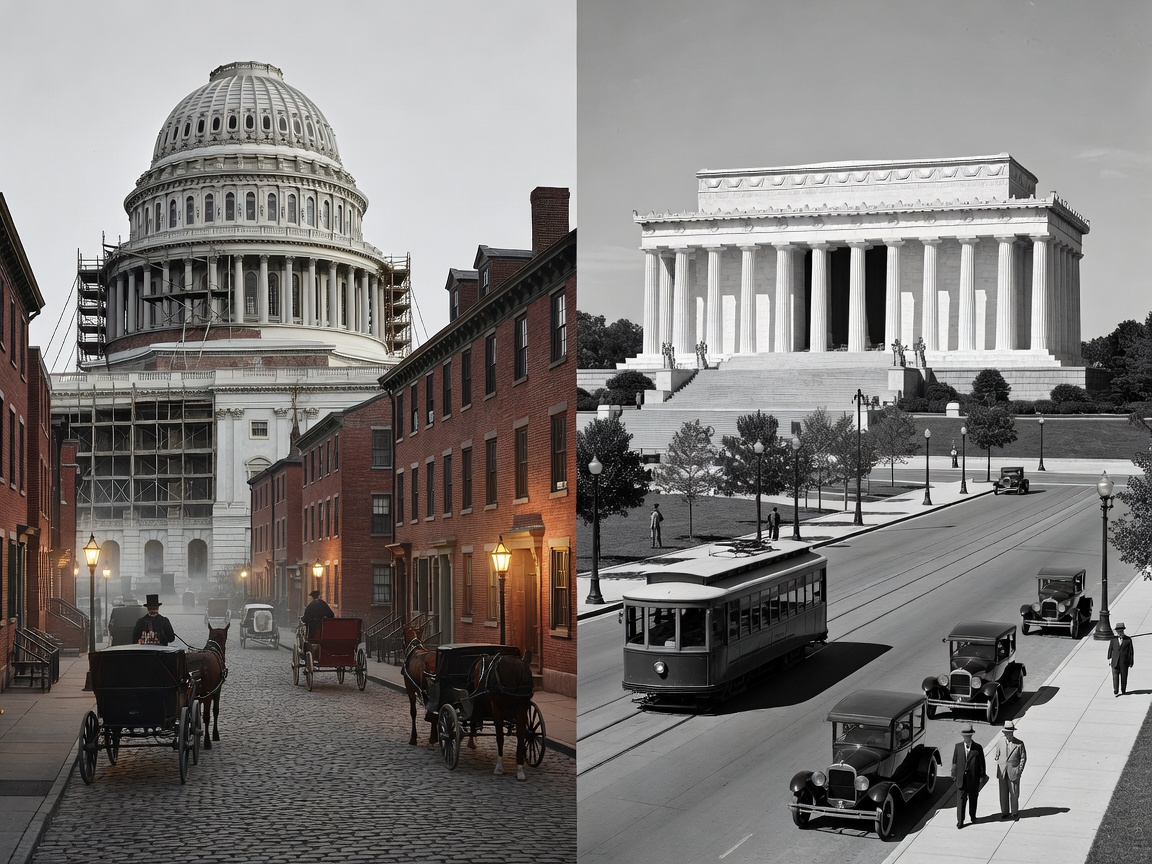
For decades, the astonishing list of coincidences between the lives and deaths of United States Presidents Abraham Lincoln and John F. Kennedy has captivated the public imagination. Circulating as early as 1964—shortly after Kennedy’s tragic assassination in Dallas—the list of parallels has grown over time, passing through newsletters, early internet forums, and social media. But when examining the historical record closely, what emerges is a fascinating blend of genuine synchronicity, cherry-picked statistics, and exaggerated folklore.
The Century Gap
The most foundational coincidence linking the two leaders is the timeline of their political ascensions. Abraham Lincoln was elected to the United States Congress in 1846. John F. Kennedy was elected to Congress exactly one hundred years later, in 1946. This century-long gap followed them to the highest office in the land: Lincoln won the presidency in 1860, and Kennedy won the presidency in 1960. Both men were involved in highly contentious elections and took office in periods of intense national strife—Lincoln facing the brink of the Civil War, and Kennedy facing the height of the Cold War and the burgeoning Civil Rights movement.
The Tragic Fridays
The circumstances surrounding their assassinations provide some of the most chilling parallels. Both presidents were shot on a Friday. Lincoln was assassinated on Good Friday, April 14, 1865, at Ford's Theatre in Washington, D.C. Kennedy was assassinated on Friday, November 22, 1963, in Dealey Plaza, Dallas. In both instances, the fatal wounds were inflicted to the back of the head. Furthermore, both men were seated beside their wives when the fatal shots were fired, adding a deeply personal parallel to the national tragedies.
The Successors Named Johnson
Perhaps the most famous historical rhyme involves the men who succeeded them. Because both presidents were assassinated, their Vice Presidents were immediately sworn into office. Both successors were Southern Democrats with the surname Johnson. Andrew Johnson, who succeeded Lincoln, was born in 1808. Lyndon B. Johnson, who succeeded Kennedy, was born exactly one hundred years later, in 1908. Both Johnsons found themselves tasked with unifying a deeply traumatised and politically fractured nation.
Separating Fact from Fiction
While the verified coincidences are remarkable, human nature's desire to find patterns has led to several fabrications being added to the list over the years. For example, a widely shared claim states that Lincoln had a secretary named Kennedy who warned him not to go to the theatre, while Kennedy had a secretary named Lincoln who warned him not to go to Dallas. While Kennedy did indeed have a secretary named Evelyn Lincoln (who did warn him about the Texas trip), there is absolutely no historical record of Abraham Lincoln having a secretary named Kennedy. His primary secretaries were John G. Nicolay and John Hay.
Another popular falsehood is that John Wilkes Booth ran from a theatre and was caught in a warehouse, while Lee Harvey Oswald ran from a warehouse and was caught in a theatre. The truth is more nuanced. Booth shot Lincoln in a theatre and fled to a barn (which was used for storage, but calling it a "warehouse" is a modern stretch) where he was cornered and killed days later. Oswald shot Kennedy from a textbook depository (a warehouse) and was later apprehended in the Texas Theatre. While geographically neat, the terminology is heavily massaged to force the parallel.
The Verified Parallels
- 100 Years between Congressional elections (1846 / 1946)
- 100 Years between Presidential elections (1860 / 1960)
- 100 Years between successors' births (1808 / 1908)
- 2 Assassins known by three names (John Wilkes Booth / Lee Harvey Oswald)
The Mathematics of Coincidence
Statisticians point out that these parallels, while intriguing, are largely a product of the "clustering illusion" and the Law of Large Numbers. Given the vast amount of data available about the lives of any two public figures, finding points of intersection is almost a mathematical certainty if one looks long enough. The 100-year gaps, for instance, are partially an artifact of the four-year presidential election cycle in the United States.
Nevertheless, the Lincoln-Kennedy coincidences remain an enduring part of American historical lore. They serve as a poignant reminder of the cyclical nature of history and the enduring vulnerabilities of those who lead. Even when stripped of the exaggerations and viewed purely through verified facts, the echoes between 1865 and 1963 are profound enough to secure their place as one of history's great curiosities.